
SBF Presents: Juneteenth with 2026 Festival Author Bennett Parten
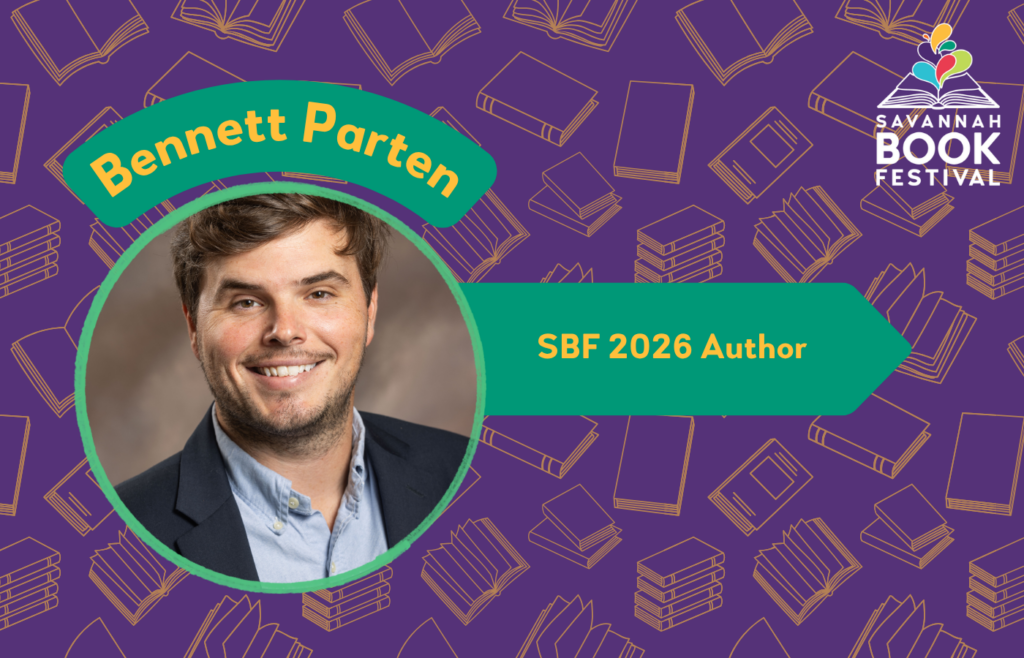
This month, SBF sat down with 2026 Festival Author Bennett Parten, author of Somewhere Toward Freedom to get his thoughts on the legacy of emancipation in Savannah. Bennett Parten is an assistant professor of history at Georgia Southern University with an area of expertise in the Civil War.
SBF: We loved having you with us at the Savannah Book Festival this past February. Looking ahead to Juneteenth this month, what conversations do you hope your book sparks around the enduring legacy of emancipation and community history?
Professor Parten: At a basic level, I just hope it shines a spotlight where it belongs: on the actions of enslaved people themselves. For a long time, we have sometimes had a tendency to tell a top-down story, to see freedom as a political process emanating from Washington and Lincoln on down. But this overlooks that out on the ground, in the South, it was enslaved people who very much made emancipation happen by running to the U.S. army, supporting the U.S. army, and otherwise destroying the Confederacy from within. So, while many histories focus on the politics of freedom, I hope this book reveals a little bit more about what emancipation looked like as an on-the-ground process and the role enslaved people played in making it happen.
SBF: You mention in previous interviews that the path of Sherman’s March aligns with the trips you often took growing up. Did this experience affect your overall interest in the Civil War? How do you feel the proximity of these events to Savannah played into your research?
Professor Parten: I think so. I mean, how could it not? I grew up a native Georgian interested in History, so it just makes sense that the starting point for me would be the Civil War. As far as doing research, it certainly helped. Most of my sources actually came from elsewhere, but just having background knowledge of the state, its geography, and its history definitely made the research go a little more smoothly.
SBF: You were a Festival Saturday Author this year? What was it like to share the historical contexts of your work in Savannah? What about Sherman’s March affects Savannah today? Is there anything you notice after the book which you didn’t before?
Professor Parten: First of all, as a Savannah local who loves the book festival, it was a great privilege and honor to be included. I feel the same as someone who wrote a non-fiction work of history dealing with Savannah’s past. There are lots of great historians who live and work here, lots of serious readers of history here, and this is a city that obviously cares about its history, so it’s great just being able to contribute to that ongoing conversation.
There is also no doubt that Sherman’s March still affects Savannah, but I would go a step further. Part of what the book tries to argue is that Sherman’s March represented a landmark moment in American history writ large. While we often see it as being one of the last campaigns of the Civil War, the book tries to see it as one of the central episodes defining what American freedom actually means. So while it left a mark on Savannah, it also left a lasting mark on us as Americans.